
Self build mortgages are quite different to traditional mortgages, releasing funds in stages in order to provide the cashflow needed for building a new home, paying for materials and paying your contractors.
This makes a self build possible even for those who can't afford to finance the entire build from savings. That said, there are some limitations that come with this type of mortgage. They're less widely available than standard mortgages, which means they may be less competitive, and depending on the type of self build mortgage you choose, the rates are typically higher.
Availability has remained relatively stable into 2026, with the market still dominated by specialist lenders and building societies rather than major high street banks.
Article continues belowUnderstanding the world of self build mortgages isn't easy, so we've created this guide explaining how they work and the types available. We've also found some of the newest self build mortgage products to hit the market, plus you'll find the latest rates, updated in April 2026.
What is a self build mortgage?

Need more advice or inspiration for your project? Get two free tickets to the Homebuilding & Renovating Show.
Unlike a traditional residential mortgage, where a single advance is made on completion, self build mortgages release funds in stages as your project progresses.
These staged payments reflect the increasing value of the property as it’s built – from land purchase through to completion.
Daniel Capstick, mortgage manager at Ecology Building Society, explains: "These staged releases reflect the progress and increasing value of the lender's security (your new home) from plot purchase to obtaining detailed planning consent and, of course, the build phases through to completion."
Before applying for a self build mortgage, there are a few key considerations:
- You’ll need detailed plans and a full breakdown of build costs
- A contingency fund (typically 10–20%) is strongly recommended
- Interest rates are higher than standard mortgages
- Fees (valuation, arrangement, inspections) are often higher
- You may be able to switch to a cheaper deal once the home is complete
Lenders also increasingly expect clear evidence of build viability, including labour and material costs, before approving applications.

Daniel is a senior mortgage product and proposition manager at Ecology Building Society, specialising in self build and sustainable home lending.
Watch our video to find out how self build mortgages work
When are funds released with a self build mortgage?
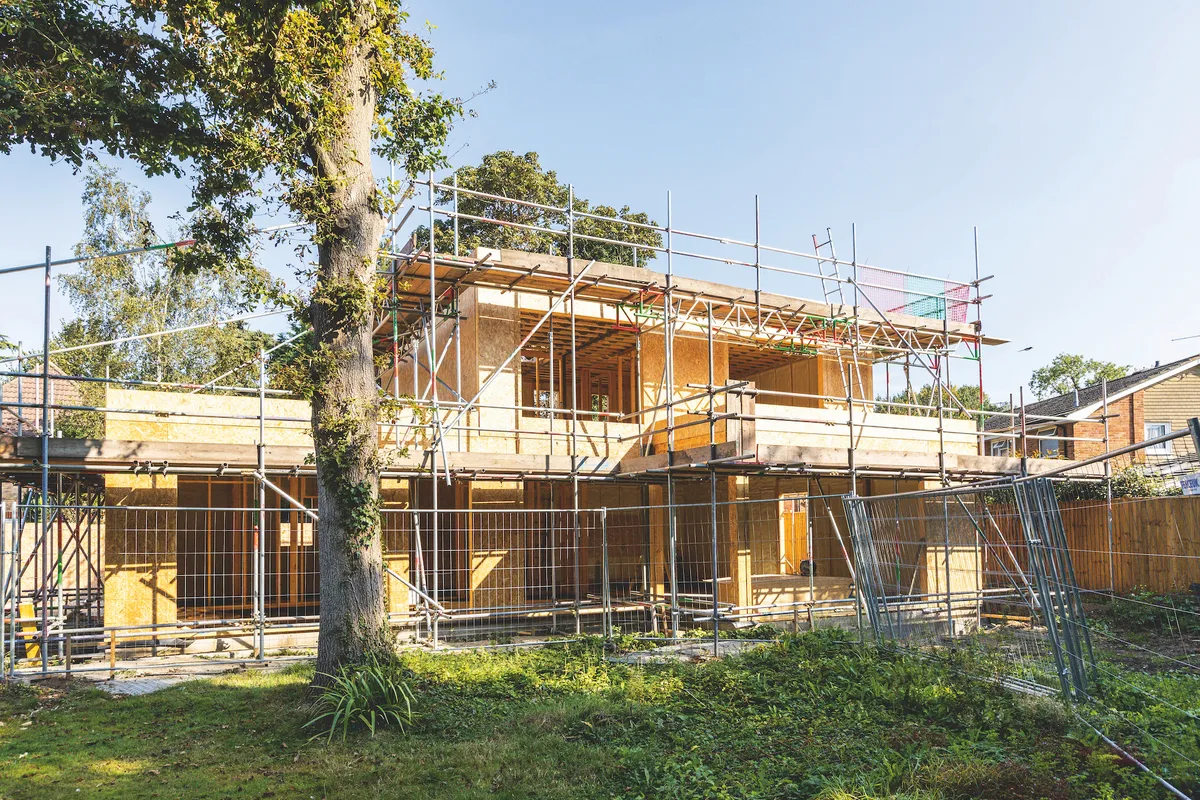
With a self build mortgage, funds are typically released at these key stages of a self build schedule:
- Land (with the minimum of outline planning permission)
- Substructure
- Wallplate/eaves height (just before the roof trusses go on)
- Wind and watertight roof tiled
- First fix
- Second fix
- Certified completion
This staged approach helps lenders manage risk, as funds are released in line with the increasing value of the property.
For custom build or group self build projects:
- Purchase of land
- Associated preliminary costs and substructure
- Construction to wind and watertight stage
- First fix
- Second fix
- Completion
For renovation or conversion projects:
- Purchase of existing structure
- Inspected completion of structural survey and cost estimate of necessary works
- Completion of load bearing elements
- First fix
- Second fix
- Certified completion

Are there different types of self build mortgage?
There are two types of self build mortgages that you can choose from:
- Arrears mortgages: If you have a large amount of cash to hand to finance some of your self build home, an arrears type self build mortgage is your best bet. These offer payments in stages after each stage of the build is complete, meaning you front up the money for the stage and are ultimately repaid.
- Advance mortgages: For those reliant on the mortgage to fund each stage, an advance mortgage releases payments at the start of each stage. This will mean you don't require short-term or bridging loans to cover the build costs upfront if you were take out an arrears self build mortgage. For many people, this type of mortgage is understandably advantageous, offering help with cash flow, however, there are fewer providers who offer this kind of mortgage, and the rates may not be as competitive as an arrears type mortgage.
Some lending institutions lend on the land purchase or existing property and at key stages during and on completion of the build project.
This can vary from:
- 75-80% of the purchase price or valuation (whichever of the two is the lower)
- Up to 80% of build costs
- Up to 75% of the growth in value of your project at key stages during construction
Some lending institutions do not lend on land, but they will lend during the build period.
Products available include:
- Discount from standard variable rate of interest
- Fixed rate of interest
- Bank base rate tracker
- Offset

How much can I borrow with a self build mortgage?
The amount you can borrow depends on your income and financial commitments, but in 2026 typical criteria include:
- Around 4–4.5x income, subject to affordability checks
- Up to 75–80% loan-to-value (LTV) with many lenders
- Some specialist products offering up to 80%+ of end value
For example:
- Ecology Building Society offers up to 80% LTV on self build mortgages
- Some products restrict borrowing to 65% LTV for lower-risk lending tiers
Deposits remain significant:
- Typically 20% for land purchase
- Plus 15–20% of build costs upfront
Chris Martin, head of product development at BuildStore, says: “Like other mortgages, the amount you can borrow will depend on your income and spending patterns, along with any other loans or credit you hold. As a general guide, most mortgage providers will consider lending around four-and-a-half times your gross yearly income.
"The amount you can borrow will also be limited by the mortgage product you choose," continues Martin. "Many products will potentially provide up to 80% of the value of your completed home, although products providing up to 95% of your build costs are available through specialist advisers."

Chris Martin is Head of Product Development and Lender Relationships at BuildLoan, where he leads the design of specialist self build and custom build mortgage products in partnership with UK lenders.
Will I be eligible for a self build mortgage?
Where you intend to live while you build will have an impact on your affordability to borrow money to build your dream home. For instance, the monthly rental payments or mortgage payments (if you intend to stay in your existing home) will have an impact on your affordability calculation.
Some lenders will accept you making upfront rental payments, which will not have an impact on your monthly income versus expenditure.
It's also worth noting that some lending institutions will not lend on certain construction systems, so do ensure you check with them.
Of course, all your design and construction methods will also need to be compliant with the current Building Regulations.
Each lender’s criteria are different, but you do need to ensure they are aware of your build type and of any payment terms and conditions your supplier has stipulated.
How do I apply for a self build mortgage?

The documentation required to apply for a self build mortgage is essentially the same as with a standard mortgage. However, additional supporting documentation will be required, which may include:
- Copy of planning permission
- Copy of construction drawings and specifications
- Copy of total project cost estimate (where possible, fixed-price contracts)
- Copy of Building Regulations approval
- Copy of site self build insurance and structural warranty
- Architect’s professional indemnity cover (if required)
- Experian credit report
An initial valuation will be carried out to establish the current value and the anticipated end value, too. (You will be required to pay the valuation fees.) Interim and final valuations will also be requested and carried out by a RICS valuer.
The reports will be presented to the lender to evidence the increase in the interim value(s) before the interim and final release of funds from the lender.
Other key points to consider include:
- A typical timescale for processing a stage release mortgage is up to three months
- Consultants, brokers, banks and building societies will carry out a forensic analysis of all supporting documents
- In particular, they will focus on income and expenditure cross checked with the bank statements
Which banks offer self build mortgages?
Self build mortgages remain a specialist area of UK lending, and are not widely offered by mainstream high street banks.
In practice, most major high street banks do not offer dedicated self build stage-payment mortgages directly to consumers.
Instead, the UK self build mortgage market is primarily served by:
- building societies
- specialist lenders
- broker intermediaries with access to multiple lenders
Self build mortgages are typically provided by regional building societies and specialist lenders, including:
- Bath Building Society – often accessed via intermediaries
- Buckinghamshire Building Society – specialist discounted and variable rate products
- Ecology Building Society – known for energy-efficient and sustainable self builds
- Harpenden Building Society – flexible underwriting and non-standard construction
- Melton Building Society – offers staged self build lending in selected cases
- Penrith Building Society – regional lender with niche construction expertise
- Saffron Building Society – supports self build and renovation lending
- Suffolk Building Society – offers staged release mortgages with flexible valuation approach
Many of these lenders do not operate a direct consumer sales model for self build mortgages.
For example, BuildStore works with a panel of specialist lenders and exclusive products designed specifically for self builders, including both arrears and advanced-stage funding options.
What are the latest mortgage rates?
Self build mortgage rates remain higher than standard residential mortgages due to staged risk and construction exposure.
Typical 2026 rate range:
- 5.5% – 6.5% (lower LTV / strong applications)
- 6.5% – 8.0%+ (higher LTV / complex builds / specialist cases)
FAQs
Are self build mortgage interest rates higher than standard mortgages?

Yes. Self build mortgage rates remain higher than standard residential mortgages due to the increased risks to lenders such as construction delays, valuations being based on future values and funds being released before the home exists in full.
Self build mortgages are typically ~5.5%–8%+, whereas standard residential mortgages are typically ~4.5%–5.5% (depending on fix period).
Do I change my mortgage once the build is complete?
Yes. Once your home is completed, signed off by building control, and independently valued (usually by RICS), you will typically switch to a standard residential mortgage.
Do I need insurance and warranties to get a self build mortgage?
A bank or building society may not release initial funds until you can demonstrate that you have a 10-year structural warranty policy in place. When taking out your warranty, it’s also a good time to ensure that you have the right site self build and renovation insurance policy in place to give you peace of mind should anything go wrong.
Anyone undertaking a build project, whether borrowing or not, should have both in place prior to starting work on site.
Subject to affordability, banks and building societies are keen to lend on residential construction projects, providing you have carried out due diligence and engaged the appropriate team(s) to achieve the successful construction of your new home.
Self build mortgages offer a structured way to fund your own home, releasing money in stages as the build progresses. While they require more planning and tighter affordability checks than standard mortgages, they remain a key route for turning self build projects into reality.
In 2026, the market is still led by specialist lenders and building societies rather than major high street banks, so using an experienced broker is often essential.
With careful budgeting, realistic costings, and the right lender, a self build mortgage can make your project achievable from plot to completion.

