


You might think tile adhesive is all the same, but it isn’t, so different types have different drying times and it is crucial to know this when tiling a wall or floor.
If you don’t leave long to dry, you could be in a world of pain if you walk on tiles before the adhesive sets, and they will start to slip out of place. Also, if you grout too soon, your neatly tiled wall could see your tiles randomly falling off, meaning you’ll have to start over. No one wants this, so make sure you read this guide carefully.
Drying times are not the same as curing times
It's important to note that drying times are not the same as curing times.
A simple explanation is that drying time is when any water content has evaporated, while curing (which can take a lot longer) is when the adhesive reaches maximum hardness/strength.
One simple tip is to make sure that you read and follow the manufacturer's recommendations on the packaging. This will typically tell you what size and what type of tiles the adhesive can be used with, where it can be used, how long it will be workable and how to apply it to get best results.
To make sure that your adhesive is dry we suggest you leave for a few hours longer than recommended.

Stephen Russsell has over 35 years of experience working in the tiling trade in the UK and overseas. He specialises in kitchen tiling, wall, floors, bathrooms, showers and repair work.

Harriet is a tile and interiors expert at Topps Tiles, with over a decade at the brand and more than 15 years’ experience working with home and lifestyle brands. She specialises in all things tiles and tile design.
Factors affecting tile adhesive drying times
Type of adhesive
Different tile adhesives have different drying times. Goodacre says, "Ready mixed ones tend to take longer to dry, while powdered adhesives that you mix with water usually set faster." You may be using a quick-set adhesive, for example, which dries faster than a standard adhesive.
Tile location
Then there are environmental issues to consider, such as temperature and humidity. Goodacre shares why, "A warm space with some airflow will help move things along, whereas a cold or damp room can slow drying times right down."
Size of tile
The size of the tile used will also affect drying times, shares Goodacre, "Tile size matters too. Larger tiles or tiles made from porcelain, which aren’t porous, don’t let much air reach the adhesive underneath, so they can often take much longer to dry.”

Shop these tile adhesives for walls and floors

An instant grab, non-slip formula wall tile adhesive for ceramic tiles that is ready mixed. Suitable for interior surfaces in bathrooms and kitchens

A fast set adhesive for walls and floors that is ready to walk on in 3-4 hours. Suitable for kitchens, bathrooms and showers

This adhesive provides flexible, robust adhesion and is suitable for use on ceramic, porcelain, and stone tiles. Can be used with underfloor heating and sets in 16 to 24 hours.
How to get tile adhesive to dry quicker
Tile adhesive has a preferred working temperature – commonly between 5-30 degree Celsius. So the first step is to make sure that your working temperature is not too cold or too hot. Once your tiles have been applied to a wall or ceiling let warm air circulate through the room. Open a window to help, but make sure this doesn’t cause the temperature to drop too low.
The alternative is to use a fast drying rapid set tile adhesive. Check the instructions to make sure it is compatible with the tile and surface you are working with.
Remember, wall and floor tile adhesive are different
Wall and floor tile adhesives are different so you need to make sure you use the right adhesive for the job.
“Using the right wall or floor tile adhesive is very important in the fixing of ceramic tiles,” explains Stephen Russell of Ashley Cross Tiling. “Typically for the DIY market, wall tile adhesive is usually sold ready-mixed. This can be used on primed plaster or plasterboard, but never for laying floor tiles as it doesn’t support weight.”
Stephen continues, “Wall tile adhesive can take 6-12 hours to set, but then again it comes down to temperature, thickness, etc.”
So how does floor adhesive differ from wall adhesive? “Floor tile adhesive usually comes in a bag, which you mix yourself. You can buy floor adhesive ready mixed, but you will find that it works out as a very expensive way to tile a floor,” says Stephen.
“Floor tile adhesive is commonly cement-based, available in a normal drying time of about 24 hours for normal conditions. Also available is a Rapid Set adhesive, which sets extremely quickly. Always mix just enough for what you can use in the drying time.”
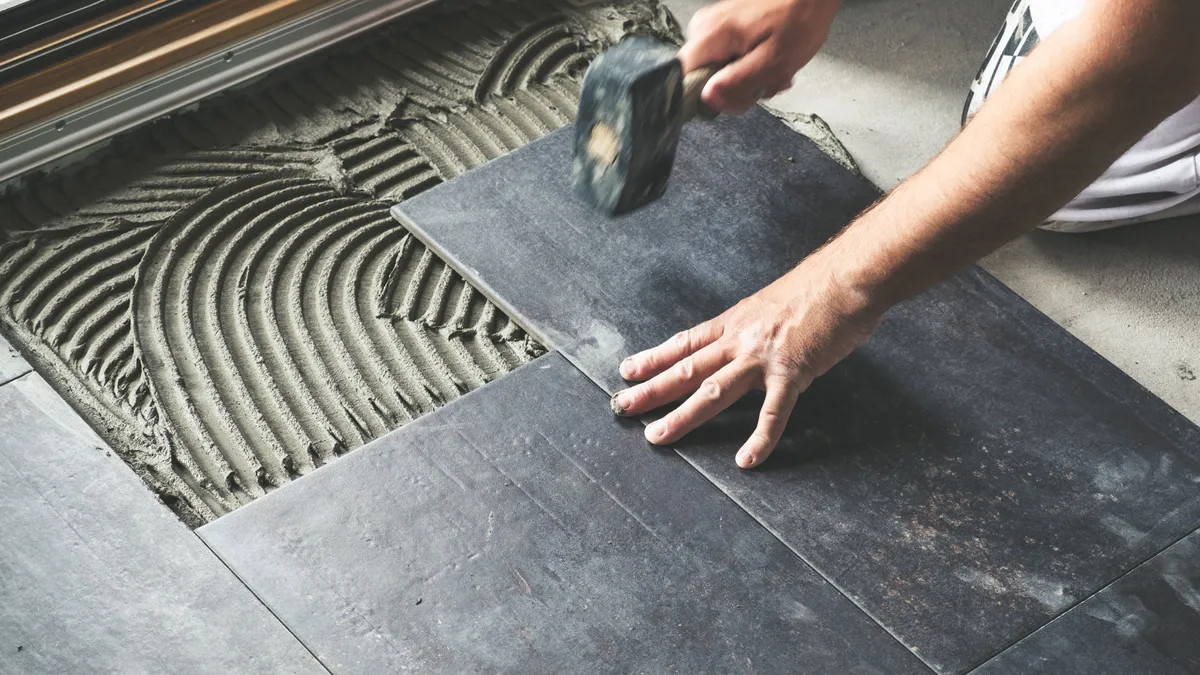
Make sure tile adhesive isn't too thick
Tile adhesive can be too thick. Goodacre shares what happens if it is, " If it’s too thick, typically it will take longer to dry, and its bond might not be as strong.
The thickness of the adhesive will depend on which tiles are being used and how flat the surface is. Goodacre shares what works well: “On walls, you want a fairly even layer applied with the right notched trowel so the tile grips well without sliding around.” The adhesive should be approximately 3mm when the tiles are applied and pressed into place.
She adds, “Floors normally need a little more adhesive because they have to support weight and foot traffic, but you don’t want to build up a cakey or thick layer. You need to get a good, even amount of adhesive coverage behind the tile so it’s properly supported.”
Make sure floor tile adhesive is completely dry
This will depend on what adhesive you are using and room conditions, says Stephen Russell. “When using normal floor adhesive, it’s probably best to wait 24 hours before walking on it or grouting floor tiles."
But, as already mentioned, it will vary if you are using a different adhesive. “Rapid Set Adhesive can typically be walked on and grouted after a couple of hours," says Stephen.
FAQs
How long do you leave tile adhesive before grouting?
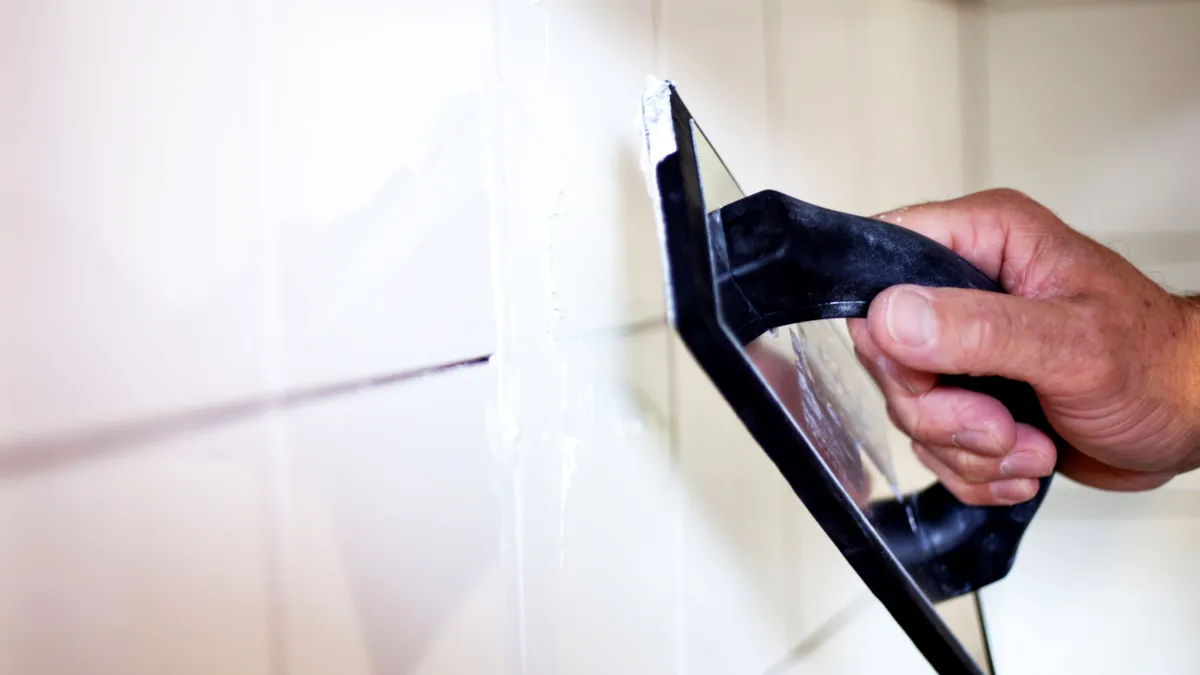
Twenty-four hours is the typical timeframe. It’s common practice to tile one day and then add the grout the following day. But you will need to check that the tile adhesive is dry before you start grouting. If the adhesive is not dry, you will need to leave it for another 24 hours and check again. Once the tile adhesive is dry, you can start adding grout.
If you add grout before the tile adhesive is dry, you will be trapping moisture behind the tiles. This will lead to a weaker bond and to tiles falling off the wall or moving if on the floor. The trapped moisture can lead to mould forming in the grout and discolouration. If any of these issues arise, consider regrouting the tiles to get a proper finish.
Why is my tile adhesive not drying or sticking properly?
“If tile adhesive isn’t drying or holding properly, and you’ve used the correct type, then you might find that the way the laying surface was prepped beforehand is the issue,” shares Goodacre.
Preparation is key, says Goodacre, “The wall or floor needs to be clean, dry, solid and level before you start.” She adds, “Dust, grease or leftover residue can all interfere with the bond, and uneven or raised areas can also cause problems because the tile won’t sit flat or flush into the adhesive.”
If you are having issues with larger tiles, Goodacre says, “With larger tiles, it’s also good practice to back butter the tile by applying a thin layer of adhesive to the back before fixing. This helps improve contact and gives a stronger bond.”
One of the benefits of tiling on tiles is that you will have a flat surface to adhere to. Just make sure the tiles are clean and roughed up to improve adhesion.
Now you know how long tile adhesive takes to dry. Be sure to check out our tiling a corner, tiling around a window, and porcelain vs ceramic tiles guides to help you achieve a good-looking, professional finish.

