
Autumn is an interesting time for our lawns. Though we are perhaps spending less time outdoors, with the colder weather and more frequent wet spells, the garden is still in active growth and will be for several weeks to come.
When it comes to lawn care, autumn is a crucial time with it being the perfect season to perform essential tasks to improve the health and resilience of your grass before winter sets in.
There will also have been damage caused over the summer which needs repairing. If you wait until it gets too cold your grass will go into a period of dormancy and performing these tasks will cause more harm than good.
8 essentials for autumn lawn care
I approached a number of gardening experts for their essential autumn lawn care tasks and they were only too willing to share their tips, understanding that a gardener's lawn is often their pride and joy, and maintaining their health can be a battle, particularly for newer gardeners.
Angela Slater, gardening expert at Hayes Garden World begins by explaining how to know when to perform these tasks:
"Autumn lawn care very much depends upon the weather: if it is excessively wet the best thing to do is leave the lawn alone and try not to walk across it unnecessarily. Normally autumn is a good time to do any remedial work on the lawn, when the mild damp weather allows the lawn to recuperate before winter."

Angela holds a degree in Conservation and Land Management, and has had an active interest in gardening since the age of six. For the past four years, she has been blogging and making video content related to gardening
1. Rake up any fallen leaves
One of the best things about autumn is watching the leaves change and fall. But this can be problematic for our lawn ideas. Raking them up seems like an obvious task, but there is more to this autumn lawn care job than the aesthetics.
If they are left in place the leaves will rot and can cause damage to your lawn. As well as preventing maximum air from reaching the grass, the leaves can also block essential sunlight, which is already in short supply during the cooler months.

2. Scarify to remove leftover summer debris
"Scarifying the lawn in autumn is essential as it removes all the dead grass and moss which will just decay over the winter, resulting in bald patches in spring. Remove all the dead material you pull out of the lawn," says Angela Slater.
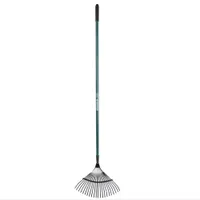
Scarifying tools include leaf rakes, dethatching rakes, spring tine rakes and mechanical or push along lawn scarifiers for larger areas.
It’s usually not necessary to scarify a lawn every year as most lawns will only need to be done every couple of years.
Shop manual scarifier tools

This adjustable steel rake is ideal for pulling up patches of moss and thatch.

The long handled rake will be ideal for sweeping up debris from the surface of your lawn.

The wheels on either side make an easier task of dragging the tines over your lawn.

3. Aerate the surface to improve drainage
Guy Jenkins, Consumer Manager for Johnsons Lawn Seed, explains that a wet spring and a summer spent outdoors on your lawn can result in compacted soil. "This hinders water and oxygen from reaching your grassroots. This can lead to poor growth and a lacklustre lawn, but this can easily be solved by autumn aeration," he says.
"Aerating a lawn involves creating small holes in the soil to allow air, water, and nutrients to penetrate the roots. By encouraging deeper root penetration, it helps your lawn become more resilient and vibrant. While you can aerate with a garden fork, a hollow-tine aerator is more effective, especially for severely compacted, clay or waterlogged soil.
"After aerating, apply a top dressing to fill the holes and improve the soil structure. A good top-dressing mix includes three parts sandy loam, six parts sharp sand, and one part compost or leaf mould," says Guy.
All that's needed is a good-quality garden fork like RHS Burgon and Ball stainless steel digging fork at Crocus. Using sand on lawns is also a great way to improve the condition of your soil.


Guy is the Consumer Manager for Johnsons Lawn Seed, the UK’s oldest provider of lawn seed, and is an expert in the field of lawn seed and lawn care.
4. Give it an autumn mow if weather allows
When you should stop cutting your grass is a common question among gardeners. It's not necessarily an issue to continue to mow the lawn in autumn as the grass is likely to still be growing. However, you won't need to cut it as regularly as you would in the summer as the growth will slow as the days become shorter and the temperatures are cooler.
Remember, the best time to mow a lawn is when it's relatively dry and with sharpened lawn mower blades. Keep in mind that it's not a good idea to mow wet grass, and if there are early frosts in autumn then avoid mowing then too.

5. Remove grass clippings after mowing
It’s best to collect grass clippings when you mow the lawn in autumn. Unlike during summer, when grass clippings can be used as mulch to help your lawn to retain moisture, the damp conditions of autumn will cause them to rot, leading to fungus and disease.
Too many grass clippings left on top of the grass can also reduce the amount of air and sunlight that reaches the base of the grass blades.

6. Level the surface
Levelling a garden lawn might not be necessary for all gardeners. But if, for example you've had moles, or particularly high traffic areas, you might have noticed bumps and dips forming.
Guy Jenkins highlights this issue as it can cause water to pool, leading to flooded areas and potentially damaging grass. Addressing it in autumn ensures it is ready to handle winter weather.
"Use a spade to carefully lift the turf in these areas, revealing the soil beneath. Adjust the soil level by adding or removing as needed, ensuring a smooth surface. Roll your turf back into place, pressing down the edges firmly to secure it."
"Water the area thoroughly to aid in root growth and re-establishment. This will help you prevent any winter flooding and also enjoy a smoother, healthier lawn come springtime," says Guy Jenkins.

7. Overseed bare patches
Autumn is a good time to overseed a lawn if there are any bare patches. Do this while the weather is still mild and damp; it will have the chance to germinate and grow some roots before winter. The best time to sow grass seed is after you have scarified and aerated to improve the drainage.
"If there are large patches of bare soil, for example where there is a well-trodden route across the lawn it may be necessary to lay turf. If an area of lawn is always going to be used as a shortcut maybe it’s time for a redesign and put in a path," advises Angela Slater.

8. Enrich your lawn with fertiliser
If it has been a particularly hot summer and your lawn has lots of bare patches, it's likely it's in need of some extra TLC. In these instances, an autumn lawn feed could give it a much-needed helping hand.
For best results, you should fertilise a lawn before forecasted rain so that it gets washed into the soil. If there is no rain forecast then you can water it in using a hose. Make sure you follow the instructions carefully on the box so that you aren't applying more lawn feed than the recommended guidelines.


Peter Chaloner is the Managing Director of Cobra, one of the UK's leading brands of garden machinery. He is a passionate enthusiast when it comes to lawn care and seasonal gardening tasks. He takes great pride in maintaining his own lawn and garden to perfection and is knowledgeable about various techniques and tools that can be used to achieve the best results.
FAQs
What is the best autumn lawn feed?
The best autumn lawn feed is one that's lower in nitrogen but higher in phosphate and potash. These nutrients encourage root development, which helps the lawn survive the winter," says Peter Chaloner managing director of Cobra.
Try AMK® Miracle Gro Evergreen Autumn Lawn Care at Amazon, which also contains moss control.
Should I scarify my lawn in autumn?
"Yes, autumn is a great time for scarifying your lawn. It helps remove thatch and dead organic matter, preventing moss from taking over. Scarifying promotes better water drainage and allows grass to develop deeper roots, which will help it survive winter," says Peter Chaloner managing director of Cobra.
Should you cut grass in October?
"Yes, you should still be cutting your grass in October, but raise the mower blades to leave the grass a bit longer – around 40mm. Cutting the grass too short can make it more susceptible to moss and winter damage," says Peter Chaloner managing director of Cobra.
Remember it's not advisable to mow the lawn when it's wet or frosty as this can cause damage to the grass.
Can you put autumn lawn feed on wet grass?
"It’s generally safe to apply autumn lawn feed on slightly damp grass, as this helps the fertiliser soak into the soil. However, avoid applying it during heavy rain, which could wash the fertiliser away before it’s absorbed," says Peter Chaloner managing director of Cobra.
Does grass still grow in autumn?
"Yes, grass continues to grow in autumn, though at a slower pace as temperatures drop. That’s why it’s important to keep mowing, feeding, and caring for it during this season to promote healthy growth into the colder months," says Peter Chaloner managing director of Cobra.
To give your grassy area a neat finish why not have a look at our guid on how to edge a lawn.
EDITOR’S NOTE: An earlier version of this article included a quote from a purported expert whose credentials we have not been able to verify. The quote has been removed. We regret this lapse in our verification process and have updated our internal protocols to reduce the risk of recurrence.

