
If you’ve seen headlines claiming wood burners are set to be banned, you’re not alone – and it’s left many homeowners confused about what’s actually happening.
With thousands relying on stoves for heat and others considering installing one amid high energy costs, knowing the facts matters.
The truth is, there is no ban on wood-burning stoves on the way, but the government is consulting on significant rule changes that could affect new stove sales, labelling requirements and supplier fines in the coming years.
New emissions limits for new stoves
The biggest proposal is a sharp reduction in permitted smoke emissions for new solid fuel appliances.
Current regulations for stoves allow emissions up to 5 grams of smoke per hour (plus 0.1g per 0.3kW of output). The government is consulting on lowering that to 1 gram per hour (plus 0.1g per 0.3kW).
Crucially, the document states: “This proposed new standard would apply to placement on the market of new solid fuel appliances only. Solid fuel appliances which are already installed or placed into the market before any new legislation comes into force would not be affected.”
So existing stoves in people’s homes would not need to be removed or replaced.
Ministers are proposing a 3–5 year lead-in period before the new limits take effect and are also considering regular retesting of stoves after they enter the market to ensure continued compliance.
Mandatory emissions and health labels
The consultation also proposes introducing a mandatory emissions label for new stoves, alongside the existing energy efficiency label.
The draft design includes:
- An A–C emissions rating scale
- Clear information on permitted fuels
- A health warning such as: “Please be aware that this appliance emits air pollution into and around your home which can harm your health.”
The government says the aim is to provide “clear, standardised, and consistent information” at the point of sale.
Again, it makes clear: “Appliances already on the market, as well as in people’s homes, would not be affected by the new labelling.”
There are also proposals for mandatory health warnings on fuel packaging, though this would require new legislation.
Higher fines for rule-breaking suppliers
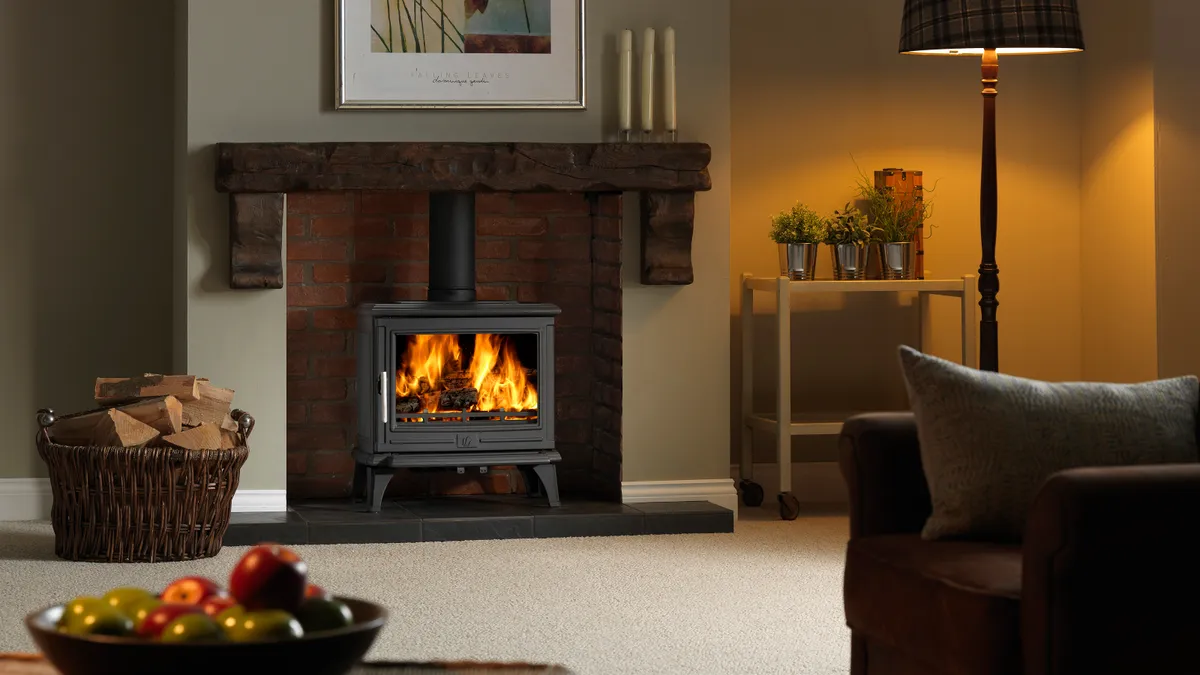
The third major proposal targets suppliers, not homeowners, to make sure wood-burners are installed properly.
Under current regulations in England, suppliers who breach fuel standards can receive a £300 fixed penalty notice. The consultation suggests this may not be a sufficient deterrent and proposes increasing fines to as much as £2,000, with higher penalties for repeat offenders.
The document says: “We are proposing increasing this up to £2000. This is proportionate to the certification fee and the harm caused by poor air quality.”
These measures would apply to manufacturers, distributors and retailers - not to individuals legally using their stoves.
Why the changes are being considered
It was found in the report that domestic burning accounted for 20.1% of UK PM2.5 emissions in 2023, according to the consultation, similar to emissions from road transport, suggesting wood-burners can be bad for the environment.
As well as this, around 23% of UK households reported engaging in domestic burning in 2022–23, though only about 1% rely on it as their main heating source.
However, the document also acknowledges: “The government accepts that requiring these households to switch to another source of heating may be disproportionately expensive and disruptive.”
The bottom line
Despite headlines suggesting wood burners are being banned or that a ban is under active discussion, the January 2026 consultation contains no proposal to outlaw existing stoves or prevent new installations.
Instead, ministers are debating tougher standards for new appliances, clearer health labelling, and stronger supplier penalties - major regulatory changes, but not a ban.

