
IFA Berlin is one of the world’s biggest annual tech showcases, with hundreds of exhibitors including appliance manufacturers, gadget makers and smart home technology providers. Look past the hectic crowds and the karate-kicking robots, and there are always some interesting new home tech ideas to discover.
As a home improvement enthusiast, I was eager to traipse the halls to find the best new products that could improve your home, upgrade your DIY and generally make life easier.
From portable heaters that adapt their settings to suit your biometric data, to a dishwasher that uses a camera to see exactly which items you’ve loaded and washes accordingly, here's where home tech is heading.
Appliances that adapt to the body
We all know that smart appliances adapt to the user depending on what you ask them to do – but at IFA 2026, the air treatment brand Dreo revealed plans to integrate its tech more deeply with our individual needs.
Rather than you having to tell it what you want it to do, a new range of appliances will use biometric data from devices like smart watches to automatically adjust their settings. The likely first-use case, potentially scheduled for rollout in 2027, will see biometrics such as sleep scores used to tweak the settings on Dreo’s electric heaters – while the user is asleep.
“We call it ‘Dreo Air Intelligence’, and it’s an AI-powered air management system that connects to different product categories and responds to personal data,” said top Dreo designer, Yunpeng Zhao.
“The first factor we’re looking at is sleep quality, but we’ll also target other aspects of how air quality affects us all, using biometrics like wellness scores. Of course, users can choose whether to share personal data or not, but everyone should have the option to access this technology at an affordable price.”
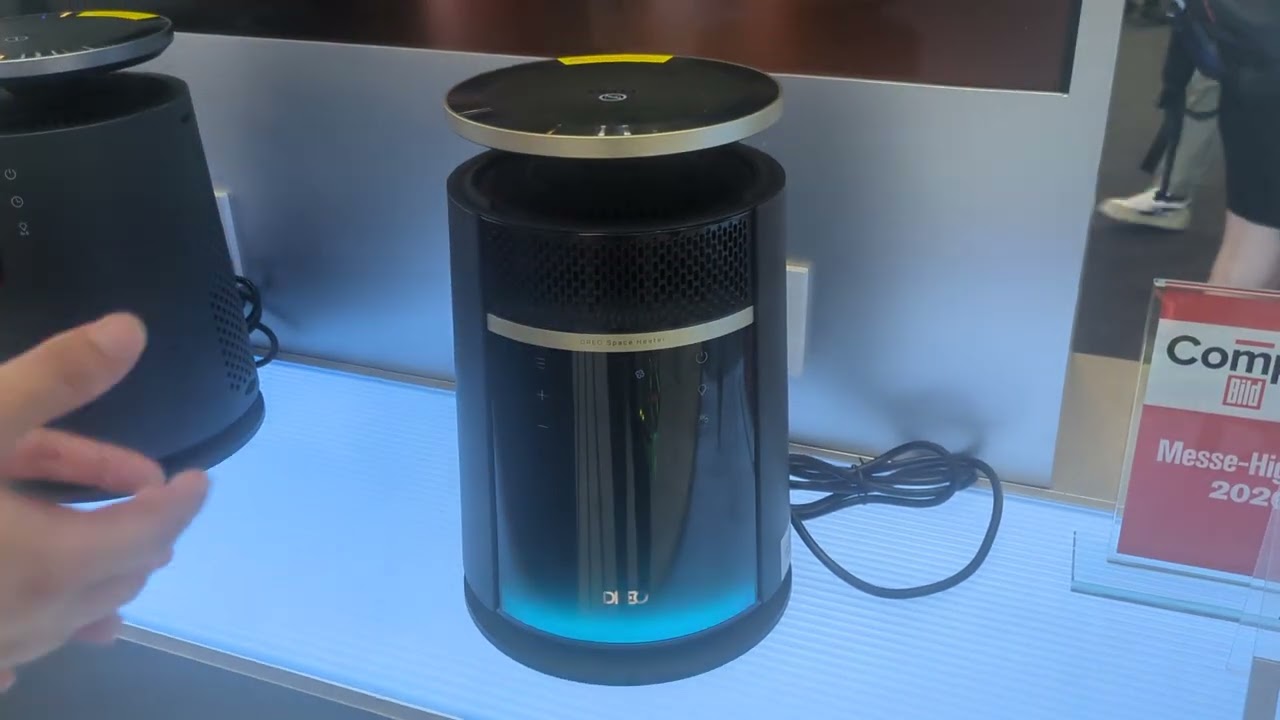
Dreo is partnering with Finnish wearables specialist, Polar, to realise this futuristic vision. “We already have the data to show that a one- or two-degree deviation in temperature can decrease deep sleep, but the environment is not yet listening,” said Spiros Andreou, Polar’s head of global industry and technology partnerships.
“[This use of technology is] starting with sleep, and it can go from there. Understanding the person is what makes the whole thing meaningful.”
One of the first smart appliances to use biometric inputs is likely to be the Dreo Whole Room Heater 720S. This is a compact portable electric heater that heats evenly towards all sides when its top panel is raised up, or more directionally with the top panel down. The device, which will join Argos’s selection of Dreo heaters soon, also has a cooling mode and LED lighting that can be synchronised to streaming media.
Plug-in solar tech advances for UK homes
Just a week before IFA Berlin 2026, the Department for Energy Security and Net Zero made plug-in solar panels legal to buy and use across the UK. This means you can buy wall or floor-mounted panels, connect theb to a unit that converts DC electricity into household-friendly AC, and then plug this into a standard wall socket so that the current can be used to power active appliances.
At IFA, several leading household power brands showcased products that can play into a plug-in solar setup. One company, Jackery, recently announced a new line of solar battery systems to use with plug-in solar panels, including the 1,200W SolarVault 3 Pro, which is due to launch soon.
“The big difference with these set-ups is that you can just plug the panels in rather than having them hardwired, so you can save money on installation,” said Yuanchi Yang, the product manager at Jackery’s IFA booth.
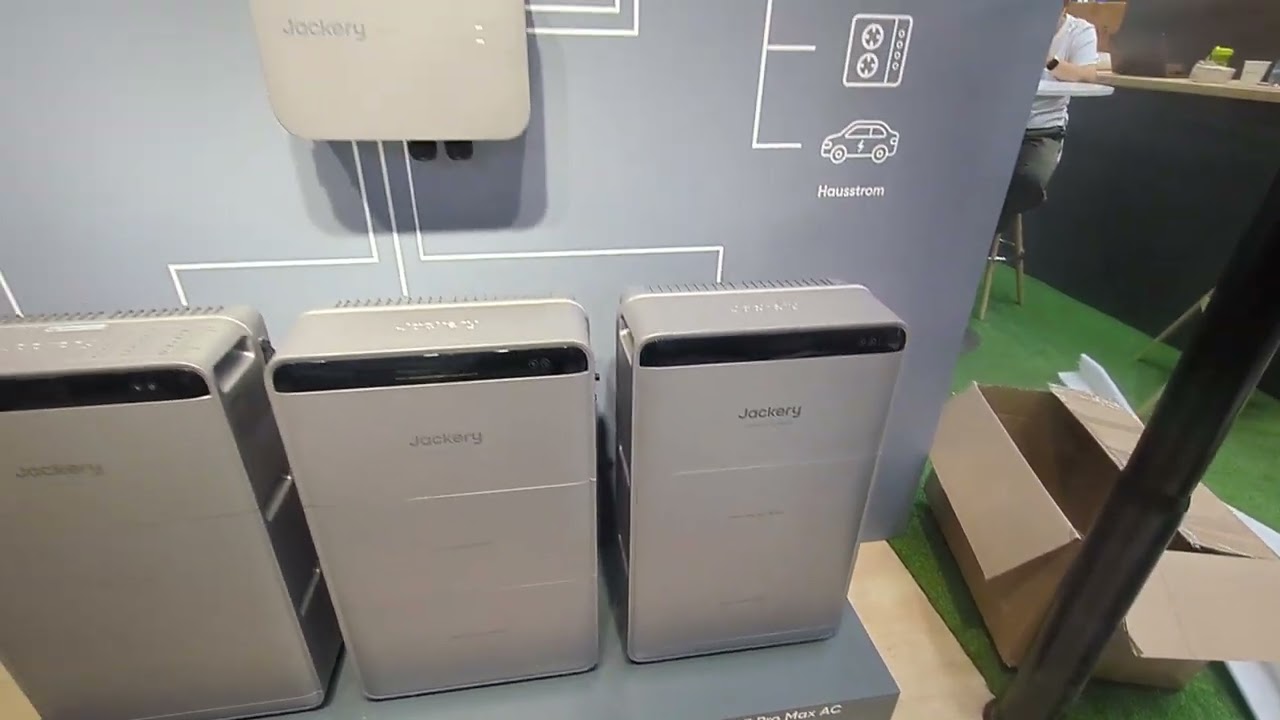
Anker, which you might know for its power banks, also showed impressive solar storage options including the SOLIX Solarbank Max (not yet available in the UK), which can work with up to 20 solar panels. British households can already make use of the brand’s SOLIX Solarbank 4 E5000 Pro, which stores up to 5,000Wh of solar-derived energy.
“Solar is a big topic in the UK as you can now have plug-in solar, but it’s been this way in Germany for 25 years,” said Michelle Kreisig, head of PR & public affairs at Anker SOLIX. “We already have the smart home machines, but energy is what drives them. Our idea is to make it very simple to get that energy via plug-in solar.”
Miele’s smartest dishwasher yet
Some of the screens around Miele’s cavernous IFA 2026 booth displayed a bold statement: ‘The end of housework is in sight’.
This message might have been slightly over-optimistic, but the brand’s new top-of-the-line dishwasher, the G8 Diamond, seems like it might be a step in the right direction for well-resourced households. Its UK launch is estimated for April 2027 and we're interested to see if this new product could make it onto our list of best integrated dishwashers.
“There’s an in-built camera that sees what is inside the dishwasher and how fully it is loaded, so the appliance can adapt its settings to suit,” explained Miele's communications manager, Ines Mundhenke.
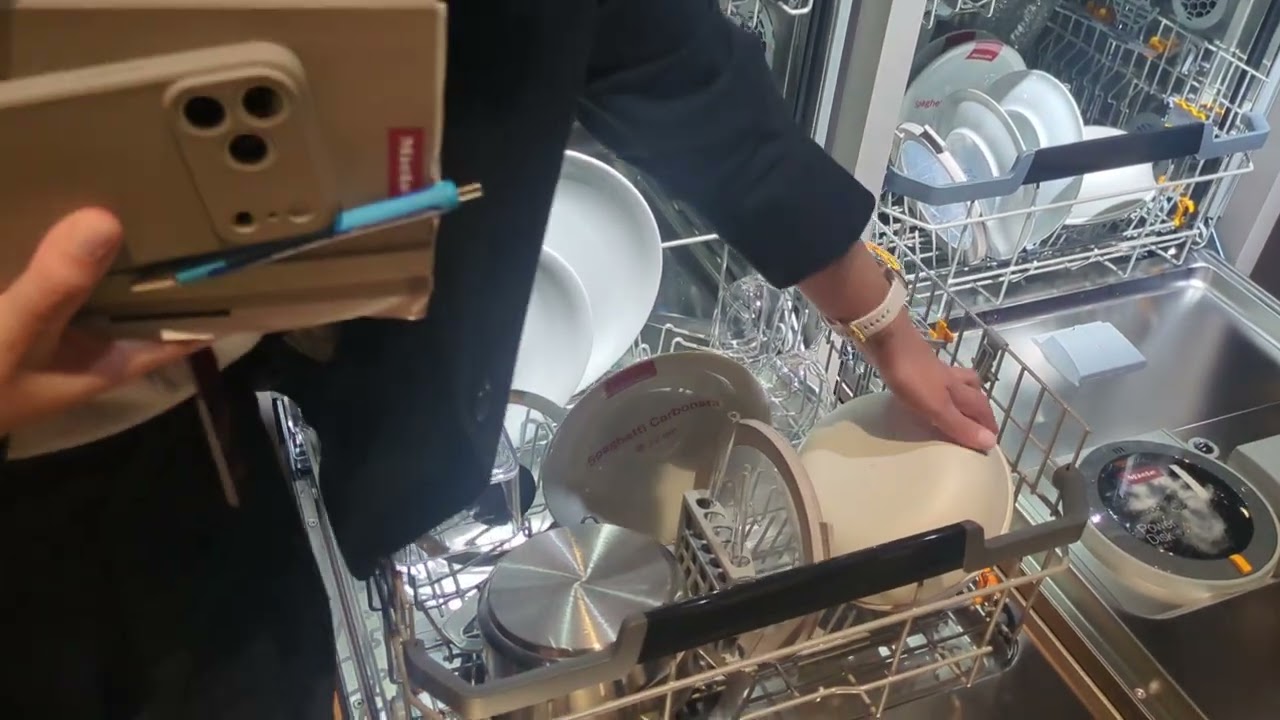
“It recognises things that are hard to dry, like plastic pots, or things that are hard to clean inside, like bottles. You close the drawers, the camera takes a photo, and AI recognises the items automatically and selects one of three extras: extra drying for plastics, ‘intense zone’ for pots and pans, and bottle cleaning for bottles.”
While the G8 Diamond is sure to be an investment at launch, Ines pointed out that Miele’s high-end innovations tend to make their way into more accessible machines. “Miele premium features from 2025 are now being added to less expensive models,” she said.
A revolutionary drill
If you’re partial to a spot of DIY, then you’re probably aware that mainstream cordless drill designs haven’t evolved much over recent decades. It was refreshing, then, to visit the Spesyn booth at IFA and witness the Spesyn Tool 3 in action – also known as the ‘ST3’.
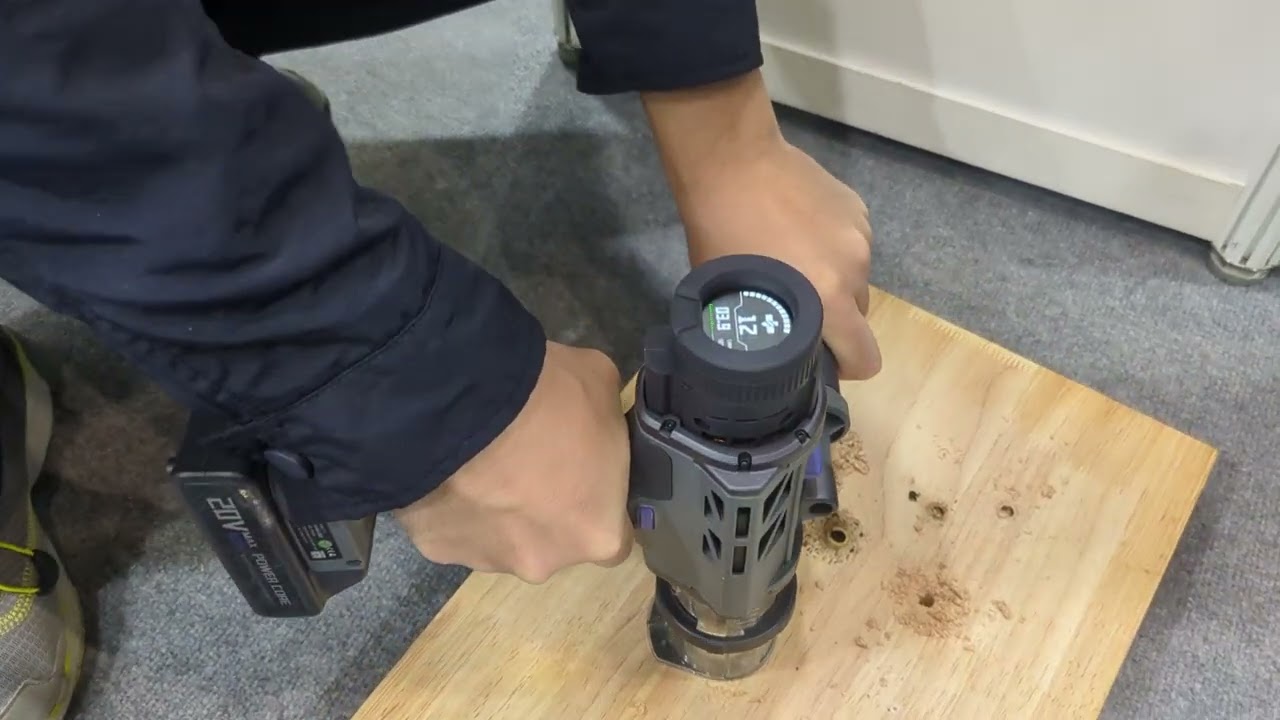
Spesyn’s overseas sales manager, George Wu, showed me a variety of features that cumulatively set this drill apart from existing cordless drills, including drilling depth adjustment via a manually adjustable collar, USB-C charging, a tapping mode alongside more commonplace drill and driver functions, and power and torque settings that can be selected via a dial and digital display.
After arriving home, I was also pleased to learn that the ST3 had won the IFA Innovation Award for Best Design at this year’s show. Pre-orders are available via the Spesyn website.
Multi-drum washing machines
If you’re anything like me, you might sometimes find yourself wishing you could throw your trainers into your washing machine along with your clothing – but you hold back out of a reluctance to mix slightly dirty and very dirty items together.
Multi-drum washing machines are here to solve this conundrum, providing two or more drums so that washing can be compartmentalised. A few models, including the Hoover MultiWash, launched in the UK last year, and judging by the variety of these washers on show at IFA, the category is on an upward trajectory.
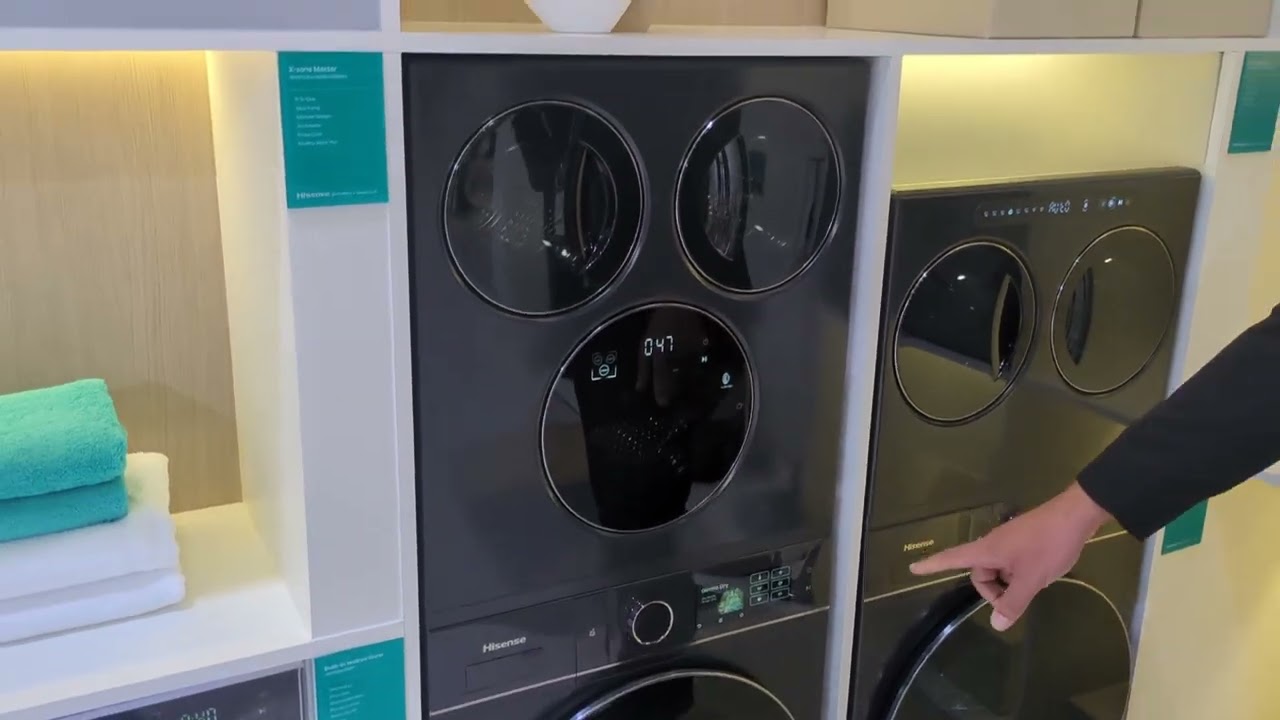
A new Hisense model, the X-Zone Master, caught my eye. Featuring two 1kg mini-drums alongside its 12kg main drum, this washer promises a more versatile and hygienic approach to doing the laundry at home – although it is not yet available in this country.
AI ecosystems for the home
AI-equipped devices were everywhere at IFA 2026, from kitchen appliances to smart assistants and security cameras. It soon became clear that several large brands were on a mission to position themselves at the centre of this latest smart home revolution, by providing technologies that bring AI devices and associated data together in an efficient domestic platform.
Anker’s new AI hub, MindBase, is a physical device that processes information from connected gadgets locally, so that it can rapidly enable advanced features such as visitor recognition.
“It’s essentially a huge brain for the home that brings together appliances so they can speak to each other,” said Anker’s UK PR & communications lead, Kate Smart. “You can ask the MindBase questions, and it connects to devices including video doorbells, security cameras and robot vacuum cleaners.”

Another candidate for smart home hegemony is Hisense, which unveiled its ‘AI Companion Suite’ at IFA. “The focus is that appliances such as the fridge, dishwasher, oven, TV and washing machine can all control each other,” said a Hisense representative. “For example, the fridge has three cameras inside, and it can suggest recipes based on the available ingredients, then send one to the oven. When the oven finishes, it sends information to the dishwasher so that it can select the right programme. If you look to the future, everything will be integrated with AI. This is the first step.”
Many of the products and technologies announced at IFA 2026 will become available over the coming months, or in 2027. If you can’t wait that long for a smarter home, read our guides to IKEA’s new smart home range and the best smart hubs to simplify home automation.

