
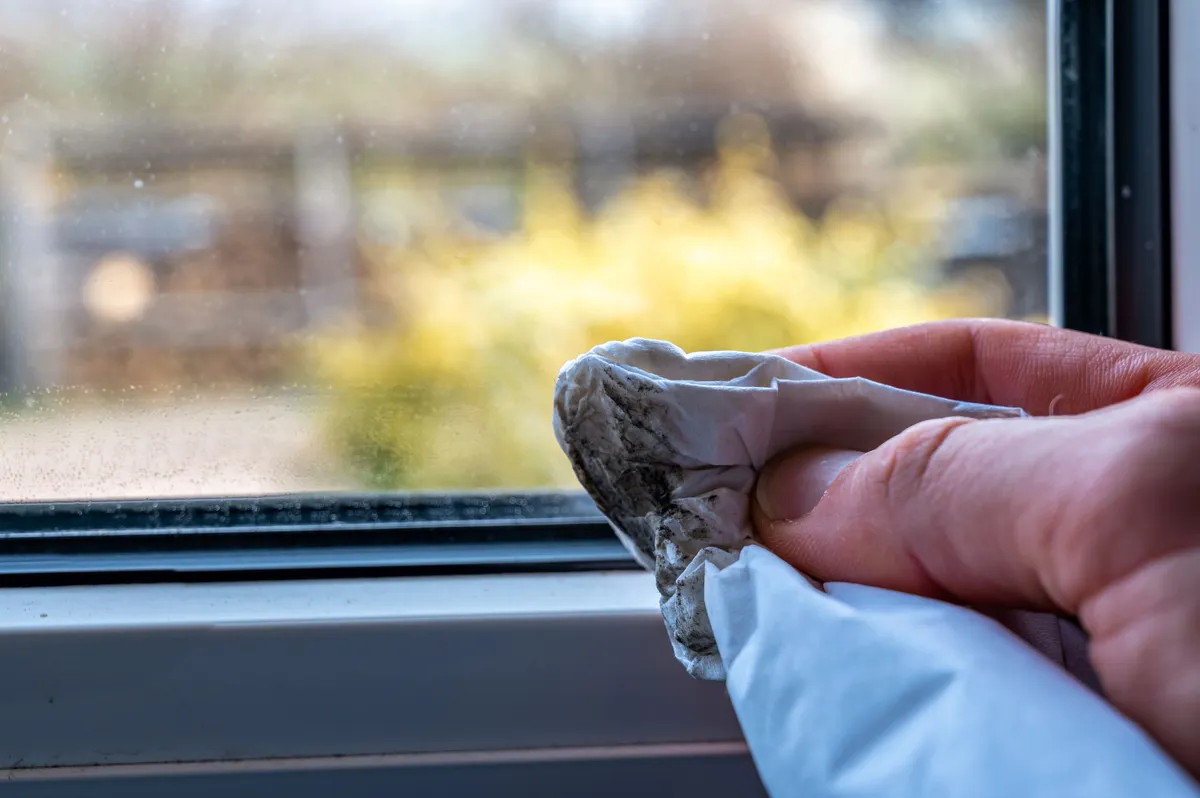
Black mould on UPVC window sealant isn’t uncommon, but it's not something you want to leave untreated. It’s unattractive, can damage your windows, and it's not good for your health. And if you leave it, it can spread to surrounding areas and get on window frames and walls, making the clean up more time-consuming.
The simple answer is to clean up regularly, especially during the colder months when window condensation often makes an appearance. But you’ll need to use the right cleaner to avoid damaging the sealant and the surrounding window. Here, window experts reveal how to make a homemade cleaner and how to keep black mould at bay.
Why there's black mould on window sealant
“There can be several causes of black mould on window sealant, including condensation, damage to the window frame, the window being sealed incorrectly and gaps in the sealant,” shares Liam Spencer, owner of Northallerton Glass.
Condensation is one very common issue, Spencer explains, “Condensation is formed on windows when warm, moist air meets a cold surface, and this causes water vapour to turn into liquid droplets.” He adds, “It can be caused by high humidity from activities like showering or cooking, poor ventilation or cold outdoor temperatures."

Liam Spencer is the owner of Northallerton Glass, and has a decade of experience in the glass processing and glazing industry. He has a wide range of knowledge on domestic and industrial glass that he likes to share to help consumers with every step of planning and development.
How to stop condensation on windows is about identifying and eliminating the source of the excess moisture. Humidity can cause mould in bathrooms, kitchens and other rooms, so solving this is often down to improving ventilation. This can be fixed by opening doors and windows, using extractor fans (check out our best bathroom extractor fans and best kitchen extractor fans guides), trickle vents over windows, a portable dehumidifier, like this low-energy dehumidifier from Meaco on Appliances Direct, and drying clothes outside or in a well-ventilated area.
John Shaw, managing director at Fenea, adds, “If you’re noticing mould only around one or two windows, it’s probably just a condensation issue.”
He adds, “But if it’s cropping up all over the place, or you’ve got puddles of water or peeling paint nearby, it might be worth checking for structural issues, like poorly fitted windows, gaps in the sealant, or even cold spots in the walls that are letting moisture in. It’s always better to catch that stuff early.”

John Shaw is the founder and Managing Director of Fenea where he oversees the supply and manufacture of premium uPVC, aluminium and timber windows for commercial and residential development projects across the UK.
Try these to help clean and control black mould

A large capacity dehumidifier that is ideal for use in the home. It can remove up to 25L of moisture a day and effectively manage humidity in spaces up to 50m2

A pack of 2 x 1 litre bottles of natural white vinegar. These can be used to clean a wide range of surfaces, including UPVC windows. Just remember to dilute to avoid damage.

This baking soda from Arm & Hammer is a natural cleaner that can be used to remove unwanted stains, grease and mould. Mix with vinegar and apply to the surface to remove.
How to remove mould from window sealant
There are a lot of suggested products, but Shaw suggests something simple, “If it’s a small patch, you can usually sort it yourself with a cloth, some warm soapy water and a splash of white vinegar. That combo’s gentle enough not to damage the UPVC, but still packs a punch against mould.”
Spencer adds, “White vinegar can be used to remove mould from sealant, but it should be diluted first and avoid the vinegar having prolonged contact with the sealant so that it does not begin to break down.” Another option is to use a diluted paste of white vinegar and baking soda.
Products not to use include the following, says Shaw, “I’d steer clear of anything too harsh or abrasive though, so no glass cleaner, white spirits, WD40, scouring powder or steel wool. They can damage the surface and make things look worse than when you started.”
Commercial mould sprays, like this One Chem professional UPVC cleaner from Amazon, are also a good choice. Always follow the instructions on the label with store-bought sprays, use the product as directed, wear rubber gloves and old clothes, as it may stain your clothes or damage your skin, and make sure the area you are cleaning is well-ventilated and away from children and pets. Also, it's worth testing products on a small, inconspicuous area first to ensure there are no adverse effects.
Of course, simply removing black mould is a temporary fix, so you must tackle the underlying issue of excess moisture and poor ventilation in the long term to prevent it from returning to UPVC window sealant and other window types.
How to stop black mould coming back
After getting rid of any black mould, you want to do your best to stop it from coming back. Shaw says, “Improve the airflow in the room. A bit of prevention will save you a lot of elbow grease later down the line.”
There are some simple, everyday solutions suggested by Shaw, “It’s tempting to keep every window locked shut when it’s chilly, but a few minutes of ventilation each day makes a huge difference.” He adds, “Just cracking a window open after a shower or while you’re cooking helps shift all that moisture-laden air before it has a chance to settle.”
If you have trickle vents in your UPVC windows, make sure to use them, says Shaw, “Don’t block your trickle vents. Those little vents at the top of your windows might not look like much, but they’re doing a big job.”
He adds, “If they’re closed or clogged with dust, airflow suffers and condensation can build up faster. Give them a quick clean and make sure they’re open when needed – they’re there for a reason!”
If you are still getting problems with mould, Shaw says, “It's likely your home just naturally holds a lot of moisture - maybe you dry clothes indoors, or live in a newer, tightly sealed house.”
If this is the case, he says, “Adding a small dehumidifier to the mix can really help.” He adds, “Pop it in high-moisture rooms like bathrooms or utility spaces and it’ll quietly pull that excess moisture from the air.”
Should I use bleach on UPVC windows?
The simple answer is no, it's not good for your windows as Spencer shares, “Bleach should not be used on UPVC windows, as it can cause permanent damage where the chemicals within the bleach react with the plastic.”
He adds, “This damage can be yellow or brown discolouration, or it can spoil the finish on the plastic and make it look dull or turn it brittle.” But it's not just the windows that will be affected, continues Spencer, “It can weaken the sealant of the windows, as it causes the rubber or silicone to deteriorate."
Black mould can strike anywhere in a home and it can also spread fast with the right conditions. It might be worth reading our black mould in bathrooms guide on how to tackle that if this is a problem in your home too.

