


So you've found the property of your dreams. The light is perfect, the village is lovely, and you've already decided which room is going to be your home office. But then the survey lands in your inbox and suddenly you're reading words like "significant cracking" and "evidence of long-term water ingress". Suddenly that dream home feels like it's sinking (and not just metaphorically).
Most survey findings aren't the end of the world. Surveyors are trained to flag everything, and a long report doesn't automatically mean a bad property. But some findings are genuine deal-breakers. It doesn't necessarily mean the problems can't be fixed, but fixing them could cost you a fortune, make the property unmortgageable in the process.
Below, we take a look at the home survey findings that should give you pause, and in some cases, make you walk away entirely.
Most survey findings aren't deal-breakers
It's important to remember that it's a surveyors job to find problems. Every damp patch and suspect piece of pointing will get logged and that's precisely what you're paying for. So when your report arrives running to thirty pages, try not to interpret length as severity.
The distinction that matters, and that most buyers miss when they're speed-reading in a panic, is between problems that are expensive and problems that are dangerous. Expensive issues you can always budget for, negotiate on, or walk into with open eyes. But dangerous, or structurally compromised, is a different conversation entirely.
Jessica Risorto, director at Redbrik Estate Agents, puts it well: "Surveys are notoriously hard to read and often sound far scarier than reality. If you have the budget and you've found the worst house in the best location, don't let a survey put you off automatically, because almost anything can be rebuilt or renovated."
A thatched roof that needs repairs is a frustrating cost, but it's a knowable one. You can get quotes, factor it into your offer, and move on. The same goes for outdated wiring, tired kitchens, or damp caused by a blocked gutter rather than a failing structure.
Where it gets serious is when the survey findings point to problems that go beyond the surface. The issues that affect the bones of the building, or that will send your insurer running for the hills. And there are three in particular that deserve your full, undivided attention...

Jessica joined Redbrik in 2015 after a career in hospitality, bringing along her customer service skills with a goal to improve the home moving process for everyone. She is now a Director and Head of Sales, based out of the company's busy Chesterfield office.
1. Subsidence
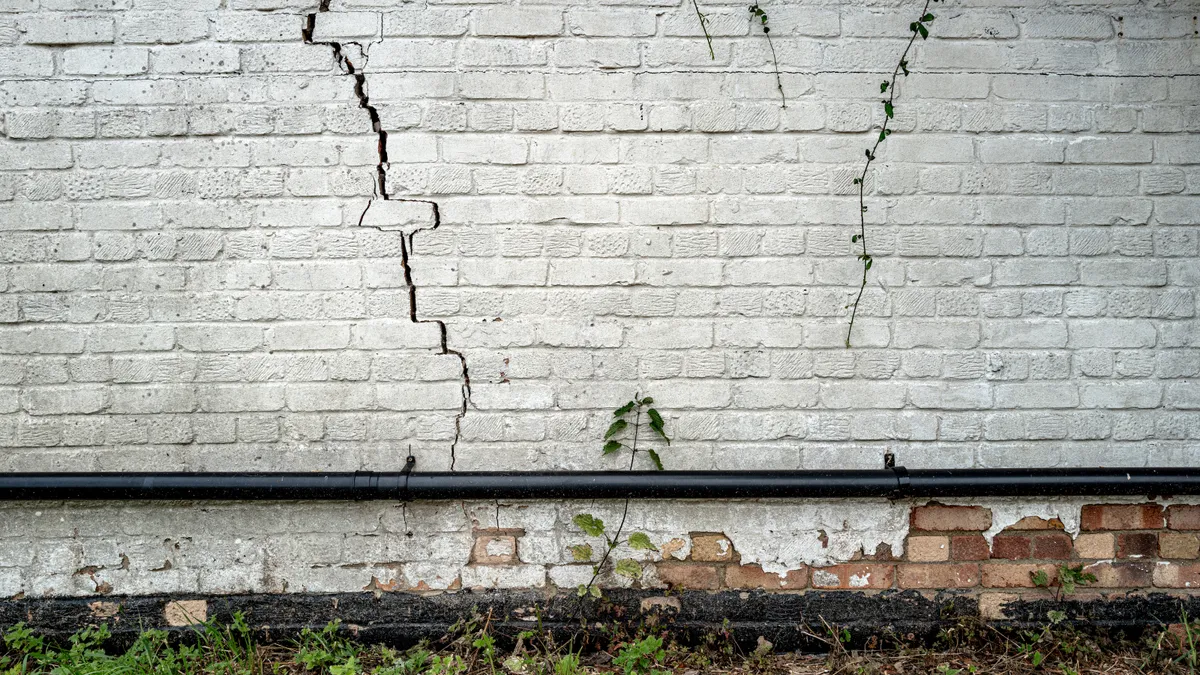
Of all the words you don't want to see in a survey report, subsidence is the one that makes everyone in the chain go very quiet, very quickly. And for good reason. Subsidence happens when the ground beneath a property shifts, causing the foundations to move and the structure above to crack and distort. It can be caused by shrinkable clay soils, leaking drains, or tree roots drawing moisture from the ground. Left unaddressed, it compromises the structural integrity of the whole building. It also has a habit of appearing on every subsequent survey the property ever receives, which tends to make it very difficult to sell your home later on.
Jonathan Christie, co-founder of The Property Buying Company, has seen enough surveys to know exactly how serious this issue can be: "Subsidence is the big one. If a survey identifies signs of ongoing or historical subsidence that hasn't been properly underpinned and signed off, that's serious. It affects the property's structural integrity, it makes the home extremely difficult to insure or mortgage, and the remediation costs can be enormous, branching into the tens of thousands of pounds in many cases."
The key phrase Jonathan uses is "properly addressed". Subsidence that has been correctly treated and signed off by a structural engineer is a very different proposition to subsidence that's been plastered over and ignored. Jessica Risorto explains: "You need to be certain that the correct remedial work has been done, the property has been sufficiently underpinned, and any problematic tree roots have been managed."
So what should you do if subsidence shows up in your survey findings? First, don't assume the worst. Ask whether it's historical or active, whether underpinning has been carried out, and whether the vendor has any documentation to prove it. Then speak to a structural engineer independently, not just the surveyor. If the answers are vague, the paperwork is missing, or the vendor can't confirm the cause has been resolved, that's your sign to walk away.

Jonathan is one of the Founders and CEOs of The Property Buying Company, a business he started in 2012 with co-CEO, Karl McArdle. Since launching, The Property Buying Company has bought over £186 million worth of properties and facilitated more than 7,600 sales across different arms of the business.
2. Roof structural defects

A few missing tiles after a stormy winter is the kind of thing you factor into your offer and forget about. What the survey is really looking for is evidence of something far more serious going on underneath.
Roof structural defects, in the proper sense, mean failures in the timber framework that holds the whole thing up. Sagging ridgelines, rotting joists, or evidence that water has been getting in for long enough to cause real damage to the structure below. This isn't a job for your standard neighbourhood roofer either, as it will require a structural engineer and a specialist contractor.
The cost of a new roof is usually a lot more than you'd budget for renovations. Jonathan Christie doesn't mince his words: "A full roof replacement or major structural repair to the roof can easily run into five figures, and it's not something you can defer."
Unlike a cosmetic issue you can live with while you save up, a structurally compromised roof is not 'optional maintenance'. So if your survey flags anything beyond surface-level roof wear, get a specialist in before you proceed. A roofing contractor can give you a realistic cost, and that number will tell you everything you need to know about whether the deal still makes sense.
Jessica Risorto offers a useful way of thinking about it: "A roof that needs replacing is a 'boring' cost, but a highly quantifiable one. The real deal-breaker is if the survey shows the roof issues have severely affected the structural beams or joists underneath, turning a standard reroof into a massively expensive rebuild."
3. Japanese knotweed

Japanese knotweed grows fast, spreads aggressively, and has a root system capable of exploiting cracks in foundations, walls, and drainage pipes. But the reason it causes so much chaos in property transactions isn't just the plant itself, it's what it does to your ability to get a mortgage.
Jonathan Christie is clear on who this affects most: "Mortgage lenders won't lend on a property with an active knotweed infestation unless a professional treatment plan is already in place. If you're a cash buyer you can take a view on it, but for anyone relying on a mortgage, untreated knotweed can stop a purchase in its tracks."
If knotweed shows up in your survey, the first question to ask is whether a professional treatment plan exists. These typically run over several years and should come with a guarantee that's transferable to the new owner. That guarantee is what most lenders want to see before they'll proceed. Without it, you're looking at sourcing and funding the treatment yourself, and then hoping your lender agrees to reconsider.
It's also worth checking where the knotweed is. Growth on a neighbouring property that's encroaching onto the land counts too, and the legal and financial implications can be just as complicated. This Japanese knotweed heatmap identifies the UK's worst affected areas.
When do survey findings affect your mortgage?
Getting a survey back with any of these three findings doesn't automatically mean the purchase is over, but it does mean the next steps matter enormously.
The first thing to do is resist the urge to make any decisions in the hour after reading the report. Surveys are dense, technical documents written in language designed to cover every eventuality. Something that reads as catastrophic upon an initial read can look very different once a specialist has actually been to look at the property.
What you should do — and quickly — is get independent expert eyes on the specific problem. That means consulting a structural engineer for subsidence or roof defects, and a specialist contractor for knotweed. Don't be tempted to ask a general builder or your "friend who did an extension once". Hire someone who can give you a written assessment and a realistic cost. That document will become your most important negotiating tool.
If the survey findings are serious enough, your mortgage lender may already be having second thoughts. Subsidence and Japanese knotweed in particular can make a property extremely difficult to insure or mortgage, and some lenders will withdraw offers entirely until remediation work is evidenced. Knowing the cost of that work, and who is going to fund it, needs to be established before you go any further.
In some cases the vendor will agree to reduce the asking price to reflect the cost of remediation. In others, they may agree to carry out the work themselves before completion. Neither option is inherently better. What matters is that the problem is properly resolved, documented, and signed off before you commit.
Sometimes walking away from a property is the most financially sound decision you'll ever make. The right property, with a clean survey, is out there. For more on navigating the hidden costs of buying a house, including surveys, legal fees and the expenses most buyers don't see coming, we've got you covered. And if you're considering buying a house at auction, where surveys aren't always possible in advance, our guide will help you go in with your eyes open.

